Why We Invested in Fearn
Infrastructure for Legal, Starting from IP
At Essence, we've always believed that the most important infrastructure gets built where the stakes are highest and the tolerance for error is lowest. That's what drew us to Han Kim and Angela Gao, the co-founders of Fearn.
Han and Angela are exactly the kind of founders we look for: deeply technical and building from lived experience. Han spent time drafting and prosecuting patents at one of the world's top law firms, watching hours of billable work get consumed by formatting, boilerplate, and mechanical tasks that left little room for the high-judgment work that actually matters. Angela holds a PhD in Computing and Mathematical Sciences from Caltech, bringing research depth that runs to the technical foundations of AI itself. Together, they didn't just see a market opportunity. They saw a broken system they had personally navigated, and decided to rebuild it.
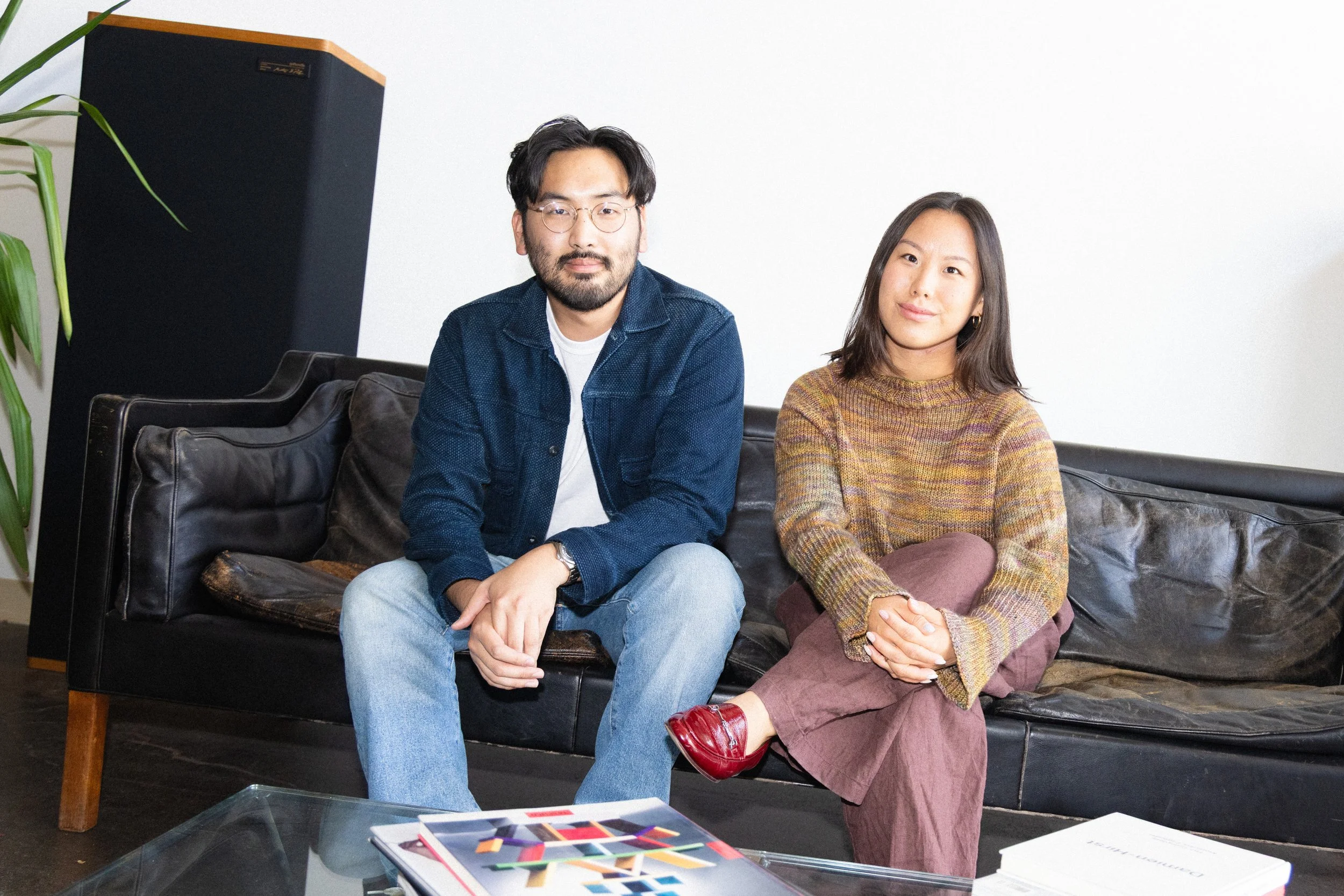
Han Kim, Co-Founder & CEO (left) and Angela Gao, Co-Founder & CTO (right)
The Problem: Legal AI That Doesn't Understand Law
Most AI tools entering the legal space fall into one of two traps: they're either generic models dressed up in legal clothing, or they're IP-specific in name only, still routing sensitive invention disclosures through public cloud infrastructure. In IP law, that's not just a product flaw. It's a legal liability. Sending an invention disclosure to a public AI model can constitute "public disclosure," potentially invalidating the very patent you're trying to protect.
Fearn's insight was that building for IP required starting from scratch. Not fine-tuning a general-purpose model, but building bespoke models that treat patent language as the rule, not the outlier. Their models run fully on-premise, with zero egress to third-party AI providers. Your IP never leaves your control.
What Makes Fearn Different: Symbolic AI and the Correctness Guarantee
The broader AI industry is racing to make models more capable. But capability without correctness is dangerous in domains like IP law, where a single hallucinated claim can invalidate a patent or expose a company to litigation.
Fearn's approach leans on Symbolic AI, a class of techniques that enforce logical constraints and structured reasoning on top of learned models. The result is outputs that aren't just fluent, but correct by construction. In industries with zero tolerance for hallucination, pharma, biotech, deep tech, this isn't a nice-to-have. It's the entire product.
The analogy that stuck with us: when Fearn generates a patent, it works like a compiler producing a program. There's a verification layer. The output is deterministic and auditable. This is what a systems software team looks like applied to legal infrastructure, and it's a fundamentally different architecture than anything else in the market.
The Bigger Vision: Infra for the Problems AI Can't Yet Solve
The easy problems are getting solved fast. The harder ones, those that require precision, domain expertise, and formal correctness, remain largely untouched. IP law is one of them. Protecting an invention is deeply technical, highly structured, and consequential. It's exactly the kind of problem that demands infrastructure, not just a chatbot.
Fearn is building that infrastructure. Starting with patents, they're creating the foundational layer for how the world creates, protects, and powers ideas. The early traction speaks for itself: Unity is already deploying Fearn in a private cloud environment to protect their engineering team's innovations, a testament to both enterprise readiness and the trust Fearn has earned with technical teams. Biotech and pharma, sectors where IP is existential, are pulling hard as well.
We're proud to back Han, Angela, and the Fearn team as they scale this vision. If you want to be part of what comes next, they are hiring 🚀