
Why We Invested in Fearn
Infrastructure for Legal, Starting from IP
At Essence, we've always believed that the most important infrastructure gets built where the stakes are highest and the tolerance for error is lowest. That's what drew us to Han Kim and Angela Gao, the co-founders of Fearn.
Han and Angela are exactly the kind of founders we look for: deeply technical and building from lived experience. Han spent time drafting and prosecuting patents at one of the world's top law firms, watching hours of billable work get consumed by formatting, boilerplate, and mechanical tasks that left little room for the high-judgment work that actually matters. Angela holds a PhD in Computing and Mathematical Sciences from Caltech, bringing research depth that runs to the technical foundations of AI itself. Together, they didn't just see a market opportunity. They saw a broken system they had personally navigated, and decided to rebuild it.

Han Kim, Co-Founder & CEO (left) and Angela Gao, Co-Founder & CTO (right)
The Problem: Legal AI That Doesn't Understand Law
Most AI tools entering the legal space fall into one of two traps: they're either generic models dressed up in legal clothing, or they're IP-specific in name only, still routing sensitive invention disclosures through public cloud infrastructure. In IP law, that's not just a product flaw. It's a legal liability. Sending an invention disclosure to a public AI model can constitute "public disclosure," potentially invalidating the very patent you're trying to protect.
Fearn's insight was that building for IP required starting from scratch. Not fine-tuning a general-purpose model, but building bespoke models that treat patent language as the rule, not the outlier. Their models run fully on-premise, with zero egress to third-party AI providers. Your IP never leaves your control.
What Makes Fearn Different: Symbolic AI and the Correctness Guarantee
The broader AI industry is racing to make models more capable. But capability without correctness is dangerous in domains like IP law, where a single hallucinated claim can invalidate a patent or expose a company to litigation.
Fearn's approach leans on Symbolic AI, a class of techniques that enforce logical constraints and structured reasoning on top of learned models. The result is outputs that aren't just fluent, but correct by construction. In industries with zero tolerance for hallucination, pharma, biotech, deep tech, this isn't a nice-to-have. It's the entire product.
The analogy that stuck with us: when Fearn generates a patent, it works like a compiler producing a program. There's a verification layer. The output is deterministic and auditable. This is what a systems software team looks like applied to legal infrastructure, and it's a fundamentally different architecture than anything else in the market.
The Bigger Vision: Infra for the Problems AI Can't Yet Solve
The easy problems are getting solved fast. The harder ones, those that require precision, domain expertise, and formal correctness, remain largely untouched. IP law is one of them. Protecting an invention is deeply technical, highly structured, and consequential. It's exactly the kind of problem that demands infrastructure, not just a chatbot.
Fearn is building that infrastructure. Starting with patents, they're creating the foundational layer for how the world creates, protects, and powers ideas. The early traction speaks for itself: Unity is already deploying Fearn in a private cloud environment to protect their engineering team's innovations, a testament to both enterprise readiness and the trust Fearn has earned with technical teams. Biotech and pharma, sectors where IP is existential, are pulling hard as well.
We're proud to back Han, Angela, and the Fearn team as they scale this vision. If you want to be part of what comes next, they are hiring 🚀
Why We Invested in ComfyUI
Today, ComfyUI announced the close of their Series A extension. We are proud to be part of that journey, and wanted to share why we believed in this company from the beginning.
Infrastructure for the Creative Layer
AI is changing how creative work gets done. But most tools today are built like black boxes: powerful outputs, limited control, and no real way to build repeatable infrastructure on top of them.
The creative layer needs what every other part of the stack eventually gets -- flexible, composable infrastructure that teams can own, extend, and build on. That conviction is what led us to invest in ComfyUI at the pre-seed in early 2024, and why we have continued to back the company as it has grown.
From Open Source Project to De Facto Standard
When we first invested, ComfyUI was still primarily an open-source project with a small but deeply technical community. It was not growing because it was polished or heavily marketed. It was growing because creators were adopting it, extending it, and building on top of it. The product was improving in real time, driven by its users.
That kind of early signal is rare and hard to fake.
At its core, ComfyUI is a node-based system for building AI workflows across image, video, 3D, and audio. Today it has over 4 million users and approximately 50,000 daily downloads. Studios use it to build modular creative pipelines. Agencies use it to power large-scale campaigns. Individual creators use it to push the edge of what generative AI can do.
In each case, the value is not just the output. It is the workflow.
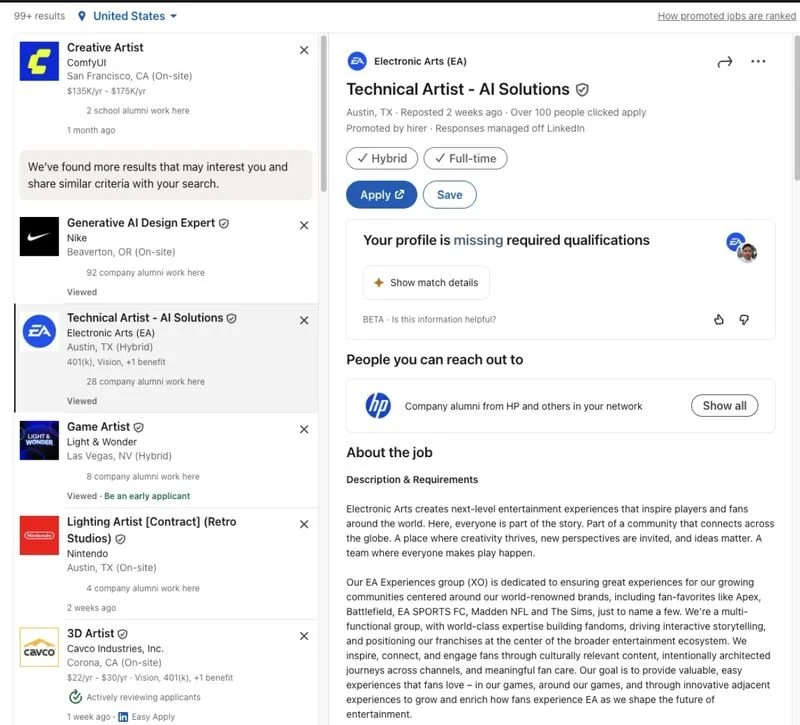
Two years ago, ComfyUI was not a hiring credential. Today, it shows up as a requirement across AI design and creative technology roles, the same way Figma or After Effects do. That kind of adoption does not just signal popularity. It signals that a new layer of the stack is being defined.
A Community That Extends the Platform
Most AI companies talk about ecosystems. ComfyUI has one.
The numbers tell part of the story. Over 60,000 community-built nodes. More than 102,000 GitHub stars. 11,500 forks. 272 contributors actively shaping the codebase. A weekly release cycle that moves as fast as the community does.
But the character of the community matters as much as its size.
ComfyUI did not grow through top-down ecosystem programs or developer incentives. It grew because individual creators -- researchers, artists, engineers, hobbyists -- found a tool they could actually bend to their own needs, and kept coming back to make it better. The ComfyHub lets anyone publish and discover community workflows instantly. The gallery exists because users kept building things worth showing. The Discord has tens of thousands of members helping each other in real time.
What the team has been intentional about is not letting that change. As ComfyUI grows into enterprise and scales toward a broader platform, they are actively working to preserve the grassroots feel that made it what it is.
That is rare to find in a venture-backed company at this stage, and it is one of the reasons we remain confident about where this is going.
The Tooling Layer Is Still Being Written
AI models are improving rapidly, but the tooling layer is still catching up. Creative teams are under more pressure than ever to produce content at scale without sacrificing quality.
ComfyUI bridges that gap. It gives creators full control without sacrificing flexibility. It lets teams standardize workflows without locking them into rigid systems. And it evolves as fast as the ecosystem around it.
We look for companies that are not just riding a wave but shaping how it develops. ComfyUI is not building another generation tool. They are building the infrastructure layer that creators use to orchestrate all of them. And they have done it in a way that puts the community at the center, not as users, but as co-builders.
We are proud to continue supporting Yoland Yan, Robin Huang, Yannik Marek (Comfyanonymous), and the full Comfy Org team as they scale this vision. If you are a builder working in engineering, design, or GTM and want to be part of what comes next, they are hiring 🚀
Announcing Fund IV

Tim Chen has quietly become of one the most sought-after solo investors | TechCrunch
Really excited to launch our fund 4!
Being a solo GP since 2019 (with a 1m fund 1!) when I didn't even really understand much about the industry, it's really filled with gratitude that Essence VC can make it this far is with the support of many of the founders, VC friends and LPs that we are able to partner with.
We've been also focusing on infrastructure companies since day 1 of our funds, working with so many brilliant engineers when the idea is very rough and according to our VC friends perform "magic / surgery" that changes the directions / ideas of the companies we work with a lot. Our infra focus has now since expanded from dev tools to now investing in infra companies in both different horizontal and vertical spaces, where the product becomes infrastructure to enable new set of possibilities / builders on top.
Again cannot really do this job at all without so many of our friends, and also Naomi Walker-Garrett that I was fortunate to hire to work with as well.
We're designed to be collaborative and intentionally kept the fund size small to be able to continue to do so, and excited to work with many more founders that are looking to build generational infrastructure companies to come!
Why We Invested in Kite
Building the Trust Layer for the Agentic Internet
At Essence Venture Capital, we back technical founders who are rethinking the infrastructure and tooling behind how software systems operate. Kite is one of those companies.
We're thrilled to share that we've invested in Kite, which we believe is building the trust layer for the agentic internet. This isn't just another AI wrapper or developer convenience tool. Kite is a ground-up rethink of how autonomous agents will identify themselves, coordinate with each other, and transact in a machine-to-machine economy.
But first, the team.
Betting on Builders with Deep Systems Vision

Kite's co-founding team: Chi Zhang and Scott Shi
Chi Zhang and Scott Shi bring a rare combination of deep systems thinking and dogged execution. They and their team have been thinking about identity, coordination, and trust for years across stints at Uber, Databricks, Salesforce, and through academic research spanning Berkeley, MIT, and Oxford.
What stood out to us from day one wasn't just the technical architecture. It was their conviction in the fundamentals and the discipline to build for the long game. In every conversation, we saw the same traits we look for in infrastructure founders: clarity, patience, and a refusal to paper over structural problems with short-term hacks.
They aren't chasing hype. They're building decades early for an inevitability.
From Isolated Agents to Coordinated Systems
Over the past 18 months, we've seen a surge in AI agents. Systems that can act on your behalf, coordinate tools, and complete goals across software environments. But in practice, most agents today are brittle and isolated. They work within narrow domains, with no persistent memory, no interoperable standard, and most critically, no trustworthy identity or native way to move money.
This is more than a developer inconvenience. It's a structural flaw.
Without a verifiable way to identify agents, enforce rules, or handle settlements, we risk replicating the very silos autonomous systems were supposed to break. Agents can't reason across services, collaborate with other agents, or carry out transactions on their own. And the moment they're expected to move money or access sensitive systems, trust collapses.
The missing layer isn't more model routing. It's shared infrastructure for who the agent is, what it can do, and how it pays.
Kite AIR: The First Step Toward Agent Infrastructure
Kite's first release, Kite AIR (Agent Identity Resolution), starts with two deceptively simple primitives:
Agent Passport: A verifiable identity system that allows agents to operate across environments while maintaining trust, context, and permissioning. Like a real passport, it can define rights and limits and ensure traceability across systems.
Agent App Store: A discovery and monetization layer where agents can call services, models, and tools and settle usage automatically via embedded payments. This means agents can now pay other agents or APIs, enabling an open services economy.
Together, these building blocks let agents behave more like autonomous actors, not just scripts in a sandbox. With programmable governance, traceable actions, and real-time, low-fee settlement backed by a custom blockchain optimized for agent use cases, Kite creates the neutral substrate that the agent ecosystem has lacked.
We've already seen this play out in a Shopify/PayPal integration, where Kite agents can browse storefronts and complete purchases fully autonomously with verifiable payment rails and usage tracking on-chain.
It's not a demo. It's a glimpse of the next internet.
Why This Infrastructure Matters Now
As more software is written by agents instead of people, trust infrastructure becomes the new backbone:
Without identity, we get spoofed agents and opaque coordination.
Without governance, we get agents acting out of bounds, without accountability.
Without native payments, we get a bottleneck that forces every transaction back through a human.
Kite solves for all three, creating the conditions for a machine-to-machine economy that is open, programmable, and verifiable from the ground up.
With fresh funding from an $18M Series A round co-led by General Catalyst and PayPal Ventures, bringing their total funding to $33M, Kite is expanding its ecosystem of integrated services, launching new developer APIs, and deepening the functionality of its identity, governance, and payment layers.
The Stakes: Building Infrastructure That Lasts
In a space moving as fast as AI, there's an instinct to "move fast and break things." The Kite team is doing the opposite: move fast, but build things that won't break when agents actually run the world.
This is the kind of infrastructure we believe developers, enterprises, and platforms will build on for the next decade. Not because it's flashy, but because it becomes the default.
🧑💻 -> If you're building agents or thinking about how your infrastructure will interface with them, we strongly recommend diving into Kite's docs, playing with the App Store, and joining the conversation at gokite.ai
To Chi, Scott, and the whole Kite team: thank you for letting us be a part of this journey. You're building the backbone of a new internet, and we're honored to help support it!
Why We Invested in Clarify
Ushering in the Autonomous GTM Era
At Essence Venture Capital, we back technical founders who are rethinking the infrastructure and tooling behind how modern teams work. Clarify is one of those companies.
We’re thrilled to share that we’ve invested in Clarify, the world’s first autonomous CRM, built from the ground up with AI at its core. This isn’t just another “AI-powered” layer slapped onto legacy software. Clarify is a ground-up rethink of how go-to-market teams operate—starting with the CRM and extending across the entire GTM stack.
But first, the team.
Betting on Builders We Know and Believe In

Clarify’s founding team. From left: Ondrej Hrebicek, Patrick Thompson, Austin Hay.
Clarify’s founding team are repeat founders and operators with the scars to prove it. We backed Patrick and Ondrej in their first startup, Iterative.ly, which was acquired by Amplitude in 2021.
Patrick Thompson is a repeat founder who previously co-founded Iteratively (acquired by Amplitude) and led product at Amplitude. With deep empathy for go-to-market teams and firsthand experience scaling data and analytics products, he’s uniquely positioned to reimagine CRM from the ground up.
Austin Hay brings a sharp operational lens to Clarify’s vision as a second-time founder. He was previously Head of MarTech at Ramp, and held roles at Runway, mParticle, and Branch—experiencing the fragmentation of modern sales stacks up close and developing a strong intuition for how commercial teams scale.
Ondrej Hrebicek is a three-time founder with a rare combination of technical depth and product intuition. He previously served as Director of Engineering at Amplitude and was CTO and co-founder of Iteratively (acquired by Amplitude). Earlier, he founded Syncplicity (acquired by EMC), where he led engineering post-acquisition. Ondrej’s passion for elegant systems and user-centric design is reflected in every layer of Clarify’s architecture.
They are a team who felt the pain of trying to make duct-taped spreadsheets and lightweight CRMs work in early-stage environments firsthand—only to eventually trade them for bloated enterprise systems that require full-time administrators just to keep them alive.
Clarify is their answer to that pain. It’s a bold new category they’re pioneering: autonomous GTM.
From AI-Native to Autonomous: The Real CRM Shift
Over the past few years, we've watched the CRM category race to keep up with the AI wave. “AI-native” has become the phrase of the moment—used to describe everything from predictive fields to chatbots layered atop legacy systems. But as investors in technical products and buyers of CRM ourselves, we think this framing misses the deeper shift underway.
AI-native describes how a tool is built. But it doesn’t necessarily change how it works for the people using it.
Today’s sales teams—whether it’s a founder running GTM solo or an enterprise AE managing a complex pipeline—need more than reactive tools that wait for input. Most CRMs still act like ledgers: passive systems that expect to be filled out and micromanaged. They might help format the data or suggest the next field, but they don’t drive outcomes on their own.
We think that’s backwards.
Salespeople don’t need another inbox or database—they need leverage. They need systems that proactively surface insights, identify gaps, and move the ball forward without waiting for a prompt. Systems that anticipate their next step—not just record the last one. In short: CRMs need to evolve from static systems of record to intelligent systems of action.
We Use Clarify Ourselves
At Essence, we run a lean team. We don’t have time to maintain a CRM that expects to be babysat.
We’ve adopted Clarify as our source of truth for managing founder relationships and supporting our portfolio. We use its AI note taker in meetings to keep tabs on ongoing needs. Its automated daily briefings help us prep for calls. And the ability to customize workflows without dev support meant we could mold Clarify to the fast pace of venture without ever filing a Jira ticket.
If we can rely on Clarify to manage our venture operation, we’re confident GTM teams of all shapes and sizes can too.
Why This Market—and Why Now
Despite billions in CRM spend, most reps still spend over 70% of their week not selling. That’s because even with AI “enhancements,” most CRMs remain reactive, not proactive.
Clarify flips that model entirely. Early customers like Paramark and Volca have reported over 80% reductions in admin overhead, faster deal cycles, and happier reps.
As investors, we are also in good company. In its first year of existence, Clarify has raised $22.5M in funding from Madrona, USVP, Gradient, Ascend and more.
One customer put it best: “I know a lot about CRMs and I’ve fallen in love with Clarify.”
A Preview of the Autonomous Future
What excites us most is that CRM is just the beginning.The Clarify team is building toward a broader vision: the autonomous GTM stack—a unified system that blends product usage data, conversation intelligence, and automated workflows to drive the entire customer journey.
The future Clarify is building is one where GTM systems are ambient, intelligent, and truly helpful. Not dashboards. Not databases. But co-pilots that take real action and help teams do more with less.
In an era where software is being reimagined across every function, we believe GTM is overdue for its own revolution. And we couldn’t be more excited to back the team bringing that future to life.
For those who share our excitement, Clarify is now available to the public! Try it for free here.
We open sourced cyoa.dev - Choose your own adventure!
Ivan and I been working on this new open source project that can generate a choose your own adventure story (text, image, music, etc) based on your own description!
Check out our post that’s shared on the restate.dev blog as we used Restate as our backend ->
https://restate.dev/blog/from-prompt-to-adventures-creating-games-with-llms-and-restates-durable-functions/
Essence VC Fund III
I’m beyond excited to announce that Essence VC has raised fund III (27m) with an awesome set of supporters, ranging from institutions (Cendana Capital as an anchor LP, Vintage Partners, Sapphire Venture, Level Ventures and Crossover VC), VC funds (NEA, Bessemer Venture Partners, Foundation Capital, Bain Capital, etc) and awesome CTOs / CEOs / VPs / Principal individuals across various infrastructure, engineering and data roles.
Wait.. Already fund 3?
Besides the pandemic letting all of us completely forgetting what has happened the last few years, I want to take this opportunity to also explain why I started Essence VC in the first place.
While I was fund raising for my first startup back in 2016, my cofounders and I drove up and down Sand Hill Road and totally enamored by all the legendary VC funds that exists and all the amazing value-add everyone claims they bring to the table.
What I realize after exiting my startup in 2018 and went through the ups and downs being a venture-backed founder, is that the type of people that really brought meaningful difference in my own journey, are people that:
1) understands the space that I operate deeply, and therefore provides meaningful value on a consistent basis
2) brings founder empathy and truthfulness to the conversations, aiming to build a meaningful connection
And upon reflection, it really dawned on me that the amount of folks on my cap table can do that is actually quite small.
Therefore, after exiting my startup, when I was presented the opportunities to angel invest into friend’s companies, I feel a special conviction and connection to the founders I backed, as often they are just like me back I was just started off fund raising.
Through the experience of angel investing, it also gave me a new purpose to pursue, which is to be the most impactful investor to infrastructure founders like myself, not just providing very specific feedback around building a infrastructure company, but also able to help being the most empathetic person during the tough times.
Looking back, I felt extremely lucky that I was able to operate in some of the greatest infra communities (Apache, CNCF) and companies (Cloud Foundry, Mesosphere, Cosmos, Lightning.ai), while also experienced the founder pains like having cofounder split-ups, major customers churning, running out of runway, etc.
And after hearing founders that I angel invested in, telling me that I have been one of the most valuable investors in every one of them, I decide to take a chance and see if I have what it takes to be a VC.
After raising fund 1 in 2019 and fund 2 in 2021, I have learned so much working with so many amazing investors in this ecosystem, and many of them become friends and LPs as well.
Through this journey, I’m very fortunate to back amazing founders and companies like Motherduck, Modal, Jasper.ai, Torq, Warp.dev and others.
Excited to continue to work along side with new set of infrastructure founders in this new fund, and continue to build a specific infrastructure fund that stands out to ecosystem.
Founder’s mental is culture
Just saw this video from Simon Sinek and it reminds me a lot about startup culture as well. From the experience of quite a few startups that I've been involved with, if the startup is doing well (most of the time in the early days it's often raising quite a few rounds, making noise and closing deals), then a lot of culture and leadership problems basically get shoved under the rug and everyone is reminded to focus on the new share price and the IPO price and all this toxicity are to be expected in a startup. However, when the rounds stop to happen, momentum starts too slow, or things get back to normal, all of the sudden culture/leadership becomes the #1 problem, and groups of people all start leaving.
And most of the time, the #1 reason this happens is that the founders or early leaders made the (no) hires and fires decision that allows this to happen since business metrics trumps all in the company.
And digging even further, I often find that a lot of these decisions really reflect the mentality of the founder themselves, of how they view work, relationships, and sometimes most importantly what they define success to be. A lot of these founders aren't a*holes if you just have normal conversations with them.
The sad truth though, is that companies that has bad culture can still achieve a lot of success (e.g: Uber, etc), as there are lots of factor and luck that can contribute to your success. Therefore, for investors you can sometimes overlook certain aspects of a founder and bet on things like timing, advantage and execution.
However, I truly believe culture is the core that provides the foundation for not just a fast scaling / valuation 10x every year company, but for a long running and enduring business. It’s the difference between your core team sticking together to go through tough times or jumping ship as soon the rose pedals falls off.
And it all comes back to the founders, starting from the self-awareness about their own mental state and perspective about what work and life is.
Announcing: Launchnotes!
I’m really excited to announce that Essence VC has backed Launchnotes in their latest seed round!
I couldn’t be more excited to be partnering with Jake, Tony and Tyler on this mission to supercharge the communication between technical and non-technical teams in enterprises.
As software and infra tools allows software teams to move faster on building and deploying bits, the bottleneck of actually shipping your software starts to appear in the non-technical teams that includes the product, sales, marketing, support, and others. I’ve often hear enterprises put on “artificial” delays just to be able to figure out how to communicate and prepare for the product changes that’s available.
Meeting with the Launchnotes team early days, the main question they’re asking that really struck me was "What if we can make enterprise ship software as fast as their software teams?”
In my own experience, the larger the organization with more teams involved in every release, the exponential graph that it creates often becomes the hardest part to move faster. I believe Launchnotes is just at the beginning of the journey to change the software delivery landscape.
I’m thrilled to be able to partner with them, and can’t wait the days and nights working them to be part of this crazy journey!
Tim
Conquering Dragons: How Technical Founders Learn Enterprise Sales
6 Leading DevOps Founders Describe Their First Enterprise Win
By: Timothy Chen & Amanda Robson
Conquering the Enterprise dragon

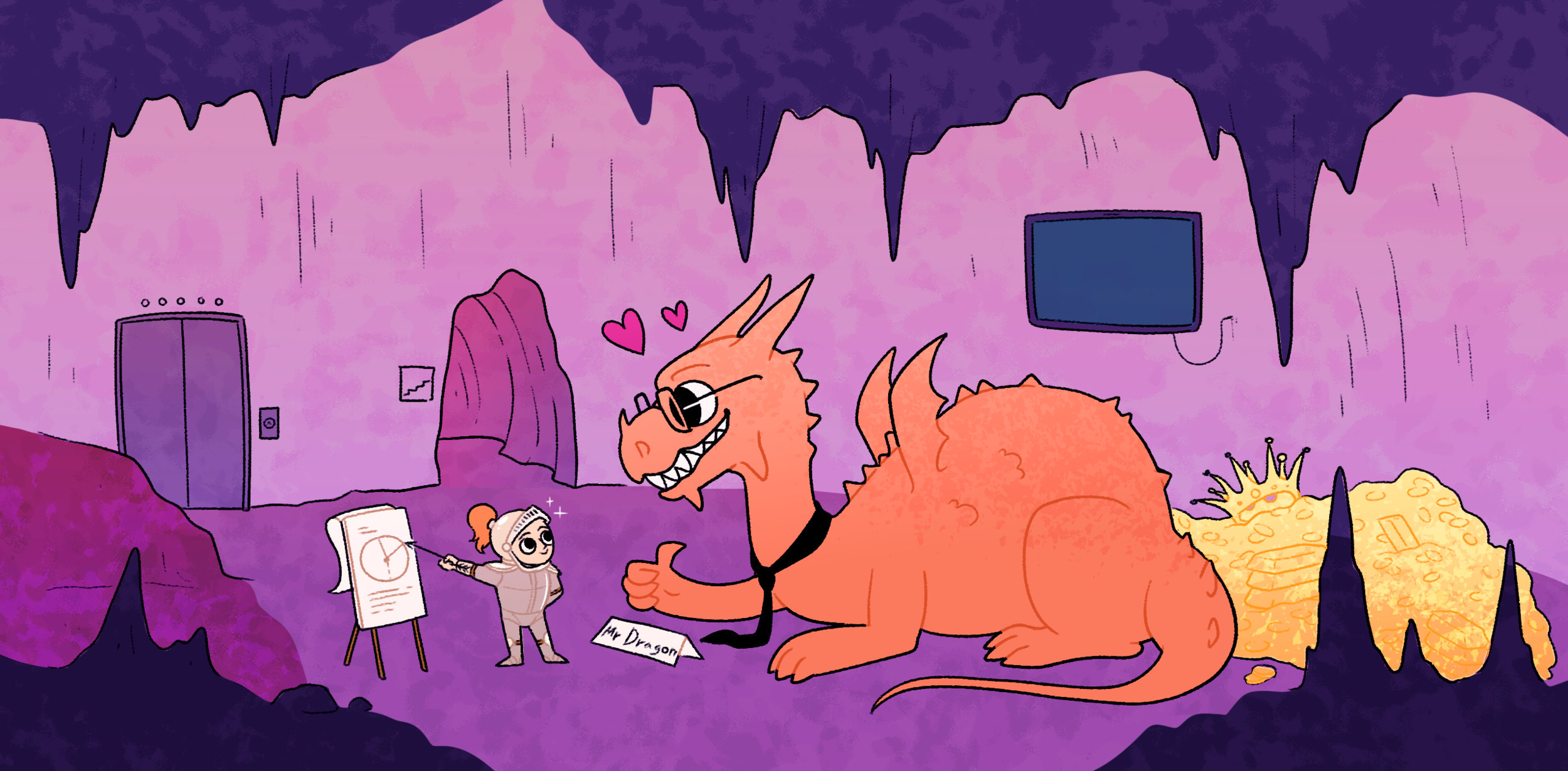
For technical founders that lack prior exposure to the business side of things, figuring out how to sell to ‘Enterprise Dragons’ (aka Fortune 500 customers) is a foreign concept. Many underestimate the difficulty, and others see the quest as extremely daunting. Some have described the journey as an epic saga, where the ‘Heroes’ (aka founders) face multiple life threatening challenges along the way.
This is why we did some discovery to learn how the best technical founders took on their first enterprise sale. We interviewed 6 leading DevOps founders who went through this hero journey, and while each founder faced different challenges, learnings from each journey can help today’s early-stage technical founder take on their first Enterprise Dragon.

The 6 founders that have conquered many dragons
To set context, the first paying enterprise customer (at least $10K annual contract value, but at times up to $100K) for these DevOps companies typically came 1-2 years into the company’s life, around the time of their Series A. Some were not enterprise focused to start - HashiCorp, Kong, and LaunchDarkly used bottoms-up sales models before their first enterprise deal. Once demand from larger accounts was clear, they developed enterprise go-to-market motions to meet that demand.
Meeting the Customer
There are different ways to get introduced to enterprise customers. In DevOps, customers typically engage with the product well before the sales process, often through the company’s underlying open source project. For HashiCorp, D2iQ, Lightstep, and Kong, enterprise customers were part of their open source community before they started paying.
Another strategy to attract enterprise customers in the DevOps space is to develop and name a new category. LaunchDarkly developed the idea of “feature flags as a service” and built a strong content strategy around it, which came with search engine optimization (SEO) benefits.
Another route is getting a warm introduction from a personal connection or an investor’s network. That strategy is what brought Algorithmia their first paying enterprise customer.

An early technical founder that is starting his/her journey, working with smaller companies, is inspired by successful startups that work with larger enterprises to do the same.
The Sales Process
After the initial introduction to the customer, the courting process began. Across all 6 companies, the sales process took much longer than what the founders had initially expected. It took 4-12 months to get from initial introduction to a closed deal with many stakeholders involved.
Key learning: Know your customer profile
A refined definition of your customer profile can make go-to-market much easier. At HashiCorp, go-to-market was initially designed for SMBs, but once the opportunity in the enterprise became clear, they reframed their pricing, positioning, and sales motion to successfully go after that segment.
At Lightstep, early adopters were “hipster” tech companies. These were fast-growing mid to late stage startups with forward-thinking engineers that had a budget and could move quickly. Their go-to-market motion was tailored to these types of companies.
At Kong, they focused on companies making the transition to microservices. They did not try to sell the concept of microservices to companies not yet interested in building that way.
Key learning: Founders should own early sales
At LaunchDarkly, they did not hire a salesperson until they passed $500K in sales. They believed founders needed to understand the buyer and their needs and convey those back to the engineering team when the company was early in its journey.
At HashiCorp, the CTO Armon Dadgar flew to Australia to train their first enterprise customer.
At Kong and Algorithmia, the founders acted as initial sales engineers working directly with prospects to close early deals.

Founders have to go through the hard training themselves.
Key learning: Make the architect successful; the user is your internal champion
When selling DevOps products to enterprise companies, there will be many personas that have to sign off on the sale. There is an economic buyer (typically VP Engineering or VP Infrastructure), legal, procurement, security, plus the architect (or engineer, title can be company-dependent) who will be the ultimate user. The architect will have a lot of sway in the decision to buy.
At Lightstep, the architect was involved in testing the technology, as well as negotiating the terms of the contract.
At Kong, the team had a Slack channel during the proof-of-concept (POC) phase that was supported 24 hours a day to make sure the architects were happy. Kong’s CTO, Marco Palladino, can still remember the level of support they gave early enterprise customers:
“I would be at Christmas dinner managing Slack messages coming from our customers in Japan.”
At D2iQ, the architect would be the key sign-off on whether roadmap features were satisfactory to translate the POC into a closed deal.
Key learning: Price with procurement in mind
After key stakeholders decide they want to buy, the contract will move to the procurement team/department (this is often part of the finance or operations teams, and not in engineering). Procurement will want to understand the structure of the contract (which will include the unit pricing is based on) and the budgeted/proposed internal ROI. Then, they will likely try to negotiate the price down.
At LaunchDarkly, initial pricing was based on events (a usage-based metric). That ended up being a difficult metric for finance and procurement to understand. Due to that feedback, LaunchDarkly moved to per-seat pricing.
At D2iQ, pricing was based on comparable products and also considered what discounting to expect based on what similar products experienced when selling to enterprise customers. The company’s Co-CEO Tobi Knaup spent time with executives and investors to collect this data.
Diego Oppenheimer learned early-on the role procurement played in the sales process:
“Procurement’s entire job is to knock vendor prices down and they have no idea what your product does or the value the organization is getting… they have a KPI, which is what did the list price come in at and what did it drop down to.”
Key learning: Be prepared for bespoke requests
When you are a small vendor selling to a large enterprise customer, you will likely need to accommodate product feature requests. Being customer-centric is important, but you want to avoid accidentally becoming a services company. As a small startup, resources are limited. Knowing what to spend time and money on and what to say no to is important.
At Kong, their first enterprise customer would only buy if they had a developer portal. In order to get the deal over the line, Kong acquired a small company out of New Zealand that had a portal called Gelato.io. They knew other enterprise customers would want that functionality so there would be enough value generated over time to justify the acquisition.
Ben Sigelman had to build in a new programming language for an early enterprise customer:
“I remember trying to write a Rails client, when I’d only ever used Ruby for three weeks in my life...eventually that customer did end up converting [so it was worth it]”
Key learning: Run in production environments early if that is where ROI will be demonstrated
If your technology will demonstrate more value to the customer by running in a production rather than a POC environment, make it easy to get to production fast. At Lightstep, contracts were fully cancellable for the first 2-3 months. This made it easy for procurement to sign off on deals and move Lightstep’s technology to production quickly.

The founder finally shows success in training with the help of the team and advisors
Key learning: Put together a closing plan
Well-trained sales executives and managers should have a closing plan. This is a document outlining the timeline to a signed contract and the steps that need to happen along the way. It will also include the stakeholders who need to sign-off on the purchase, who the champion(s) are, and what the potential blockers are. It’s important to keep all stakeholders from the customer’s side in the loop on the status of the closing plan throughout the sales process.
When Algorithmia was going through their first enterprise deal process, they underestimated the time it would take to close the sale and the number of stakeholders involved. Unfortunately, this came at the same time they were heading into a fundraise and having that customer closed was important. Despite underestimating the process, they were still able to get the deal closed, but it would have been much smoother with a closing plan.
Reflecting on the Journey
We had our 6 DevOps founders reflect back on the journey they went through developing their early enterprise sales motion. Below are some of their learnings.Key learning: Don’t underestimate the human element of sales
People buy from people. At Kong, the team was super high-touch with customers. They had a wartime salesperson who was relentless at making customers successful and because of that was able to close their first $2M of total contract value during the first 6 months the company was in market.
At HashiCorp, their first enterprise deal process taught them how relationship-driven upmarket sales are.
It’s why the CTO Armon Dadgar flew to Australia to meet with their first customer in person.
At LaunchDarkly, they would end customer meetings by saying:
“we will take care of you”
They believe their customer-service mentality is a key reason many early customers are still with them today.
Key learning: Time to “wow” matters
Making it easy for customers to quickly see value in the product makes the sales process a lot easier. At Kong, the product was simple to adopt and you did not need to learn the entire platform to start using it or seeing value from it.
At D2iQ, the full version of their product took time to get set up so they put out a free version called “Elastic Mesos” that customers could spin up in under 15 minutes.

Founders learning to master the details of this process
Key learning: Add enterprise features early on
In order to avoid repeating work on enterprise customer security questionnaires, our founders would get SOC 2 certifications early. Further, enterprise customers often want standard “enterprise features” like single sign on (SSO) integrations so it’s good to invest in those early.
Key learning: Have a high quality “about us” page on your website
Enterprise customers that buy from small startups are taking a lot of risk. An easy way to gain credibility is investing in a thoughtful “about us” page that highlights who the team is and their credentials.
Key learning: Celebrate sales wins!
Celebrating wins internally is important. Being at an early stage company is hard and takes a lot of work to be successful - properly celebrating milestones is important.
At D2iQ, they had a tradition of sabering a champagne bottle as a team when new deals closed. Everyone on the team would then sign them.
Enterprise Sales in Challenging Times
In the remote world of shelter-in-place, enterprise sales look different. You can’t meet in person or go on-site to do a demo or training. We asked our founders how selling to enterprises is different in today’s environment. Below are their perspectives.

During this crisis, founders need to find the strongest dragon.
Key learning: Customer profile matters a lot in today’s world
There are segments of the economy that have been hit harder than others. Spending time trying to aggressively close deals with companies that are themselves struggling will not yield the best ROI. For DevOps companies, focusing on closing deals in verticals such as gaming, entertainment, or ed-tech that are growing and managing scale issues will be a better use of time.
However, this is a good time to show empathy to current and potential customers that are struggling so when budgets come back, you are the first vendor they call.
Key learning: ROI matters today more than ever
Innovation labs and research projects are getting pushed to the side. Budgets are constrained, even for software infrastructure, so products that can clearly demonstrate ROI through cutting costs or performing a function more efficiently or effectively are ones that will be able to get deals signed.
Key learning: Rethink go-to-market for a virtual world
Rethink all go-to-market activities for a video-based environment. Assume there will be no in-person conferences in the near future so creating or sponsoring virtual events can be a good alternative.
Lightstep effectively used this strategy when they helped put on the Deserted Island DevOps conference in Animal Crossing.
Tying it All Together
For technical founders selling to enterprise customers, the first sale can be very challenging. Figuring out how to manage the enterprise sales process is critical to getting companies off the ground. What’s not captured above is the emotional rollercoaster of going through this process given the many unexpected hurdles that founders have to navigate.
We hope by sharing learnings from some of the best technical founders on how they managed early enterprise sales, founders going through this journey for the first time can better understand what to expect, how to plan, and can be better equipped to slay their Enterprise Dragons.
If there are other topics early DevOps founders would like more information on, feel free to reach out to amanda@cowboy.vc or tim@essencevc.fund
Special thanks to the team at covatar.com for the awesome support on illustrations!
Interview Snippets:
Good code podcast
I was on Deepsource’s Good code podcast talking about open source communities and the tooling and processes used for code reviews, and other array of things.
Check it out if you’re interested!
https://deepsource.io/blog/good-code-podcast-episode-3/
How do founders choose seed investors? It's personal.
Back in 2016 when I started my own startup, we were fundraising the first time and going on a roadshow on Sand hill road. After pitching to the first few firms, we were excited to hear all the amazing things that investors are offering, such as CXO advisory panel, talent and market platform, connecting within portfolio founders, etc. However after talking to 10-20 firms, it becomes less and less obvious how one firm differs from another. In the end of the fundraise and looking at the term sheets we got, after rounds of discussion we can only conclude that we can’t compare the firms apart anymore, it’s really about the individual partner that we will be getting to work with that seems to matter.
With the seed funding scene today, rounds are becoming more and more competitive and founders increasingly are seeing a lot more options than they did before. After talking to many founders that raised their oversubscribed seed round, asking them “Why did you end up with these institutional investors in the round?”, there will be an array of reasons like the portfolio/thesis or ownership sensitivity, but the bottom line reason has always been “Because we just really like that partner”. It wasn’t the fancy office or amazing CXO panels, it comes down to the person that the founders is looking to work with.
The next question obviously is, why do founders prefer one partner over the other? I don't think there is a clear answer as every founding team has their own preferences and desires when it comes to options. For a lot of founders, the opportunity to work more closely with iconic investors can be very attractive. And for others, if the investor is an operator turned investor then the background of the investor could be more beneficial or aligned with the company's space. Fundamentally, I do believe at the core regardless of how iconic the firm or partner is, the founder is still have to ask themselves the question, "Can I see myself enjoy working with this investor throughout the company life-time?". And to for founders to answer that question, it becomes very personal.
My true belief is that the partners not just looking at a founding team and think about the returns/risks/work involved, but actually genuinely care about the people which is the founders themselves will be part of the brand that will show through.
Part of the reason that led to start Essence fund, is that I think the term "founder-friendly" which is most common used word in VC websites is often not truly displayed. A lot of partners could be the most "founder friendly" when it's fundraising time, but act and behave differently once the deal is closed. Or showing a lot of love to certain teams that perform the best but desert very quickly the ones that doesn't. Or watching their phones majority of the time during pitch meetings, overselling a lot of promises but doesn't quite deliver in the end, it all conveys a strong message to the founders who the person is. I've seen all these behaviors in the past either during my fundraising time or in the journey of helping other teams.
My hope is that for Essence, besides focusing on helping technical teams building enterprise companies, one key value that I hope all partners in Essence now and in the future will share is the genuine care of the people behind the company. As a lot of people as noted that VC business is essentially a customer service business, the ones that actually care about the customer will show.