Why We Invested in ComfyUI
Today, ComfyUI announced the close of their Series A extension. We are proud to be part of that journey, and wanted to share why we believed in this company from the beginning.
Infrastructure for the Creative Layer
AI is changing how creative work gets done. But most tools today are built like black boxes: powerful outputs, limited control, and no real way to build repeatable infrastructure on top of them.
The creative layer needs what every other part of the stack eventually gets -- flexible, composable infrastructure that teams can own, extend, and build on. That conviction is what led us to invest in ComfyUI at the pre-seed in early 2024, and why we have continued to back the company as it has grown.
From Open Source Project to De Facto Standard
When we first invested, ComfyUI was still primarily an open-source project with a small but deeply technical community. It was not growing because it was polished or heavily marketed. It was growing because creators were adopting it, extending it, and building on top of it. The product was improving in real time, driven by its users.
That kind of early signal is rare and hard to fake.
At its core, ComfyUI is a node-based system for building AI workflows across image, video, 3D, and audio. Today it has over 4 million users and approximately 50,000 daily downloads. Studios use it to build modular creative pipelines. Agencies use it to power large-scale campaigns. Individual creators use it to push the edge of what generative AI can do.
In each case, the value is not just the output. It is the workflow.
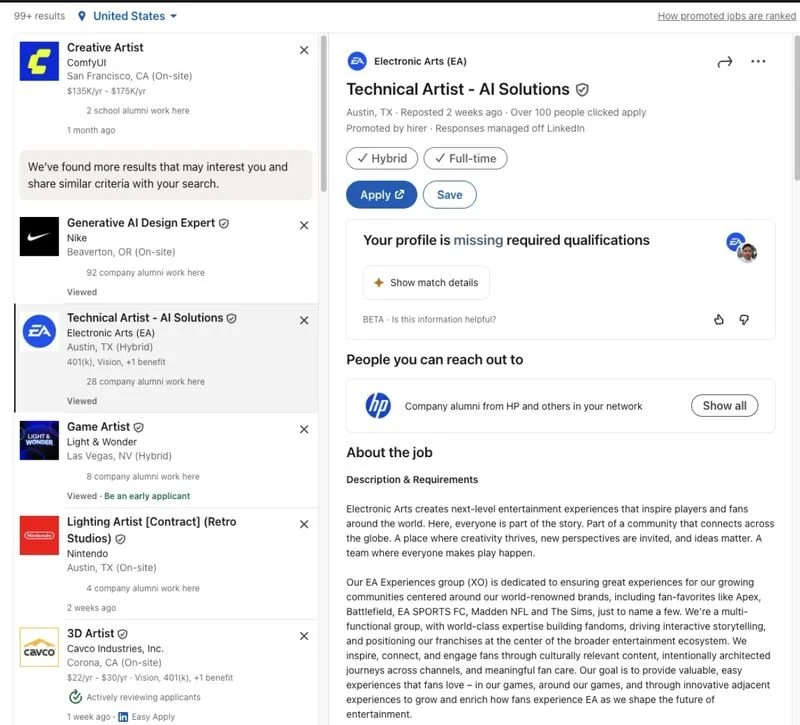
Two years ago, ComfyUI was not a hiring credential. Today, it shows up as a requirement across AI design and creative technology roles, the same way Figma or After Effects do. That kind of adoption does not just signal popularity. It signals that a new layer of the stack is being defined.
A Community That Extends the Platform
Most AI companies talk about ecosystems. ComfyUI has one.
The numbers tell part of the story. Over 60,000 community-built nodes. More than 102,000 GitHub stars. 11,500 forks. 272 contributors actively shaping the codebase. A weekly release cycle that moves as fast as the community does.
But the character of the community matters as much as its size.
ComfyUI did not grow through top-down ecosystem programs or developer incentives. It grew because individual creators -- researchers, artists, engineers, hobbyists -- found a tool they could actually bend to their own needs, and kept coming back to make it better. The ComfyHub lets anyone publish and discover community workflows instantly. The gallery exists because users kept building things worth showing. The Discord has tens of thousands of members helping each other in real time.
What the team has been intentional about is not letting that change. As ComfyUI grows into enterprise and scales toward a broader platform, they are actively working to preserve the grassroots feel that made it what it is.
That is rare to find in a venture-backed company at this stage, and it is one of the reasons we remain confident about where this is going.
The Tooling Layer Is Still Being Written
AI models are improving rapidly, but the tooling layer is still catching up. Creative teams are under more pressure than ever to produce content at scale without sacrificing quality.
ComfyUI bridges that gap. It gives creators full control without sacrificing flexibility. It lets teams standardize workflows without locking them into rigid systems. And it evolves as fast as the ecosystem around it.
We look for companies that are not just riding a wave but shaping how it develops. ComfyUI is not building another generation tool. They are building the infrastructure layer that creators use to orchestrate all of them. And they have done it in a way that puts the community at the center, not as users, but as co-builders.
We are proud to continue supporting Yoland Yan, Robin Huang, Yannik Marek (Comfyanonymous), and the full Comfy Org team as they scale this vision. If you are a builder working in engineering, design, or GTM and want to be part of what comes next, they are hiring 🚀